A video can get attention for the wrong business.
The joke travels. The comments multiply. The people who arrive want more of the joke, while you are trying to sell a service that barely appeared in the clip.
That does not make the post a failure. It does mean views and business results are different things. If you want to know how to go viral on social media, start by deciding what you want the right viewer to understand, remember or do.
What does going viral actually mean?
Viral content spreads rapidly beyond its initial audience through sharing and platform distribution. There is no single view count that makes every post viral across every platform and niche.
Sony’s guide describes the role of storytelling, format and audience response. Those are useful ingredients, but none lets you order a viral result on demand.
Set two targets instead. The first concerns the content: perhaps more shares or stronger viewing than your usual comparable posts. The second concerns the business: qualified enquiries, listeners reaching a release or people visiting a relevant product page. Keep the targets separate so a large view count cannot quietly substitute for the outcome you wanted.
Give someone a reason to send it to one person
Before thinking about a million viewers, picture one person forwarding the post. What would they write above it?
“This is the mistake we made.” “You were asking about this.” “That is exactly what you do.” Those are useful clues. Your post may solve a problem, express a recognisable experience or reveal something worth noticing.
An original example: a photographer shows why a small room looks cramped in a property photo. The video compares two camera positions and explains the trade-off without pretending the room is larger than it is. A letting agent might send it to a colleague because it is relevant to tomorrow’s work.
Rachel Pedersen’s article focuses on the intended audience and emotional response. You can apply that without manufacturing outrage. Relief, recognition and curiosity can be enough to give someone a reason to share.
Write the hook after you know the payoff
A hook is the opening that makes the right person want the next sentence or frame. It should promise something the content actually delivers.
For the photographer example, “Your room is not the problem. Try moving the camera here” creates a clear expectation. The video must then show the position and its effect. “This secret will change photography forever” creates a larger promise and a smaller reason to trust the creator.
Try three openings for the same useful idea:
- A visible comparison: show the two photographs immediately, then explain the difference.
- A specific problem: “If your room photos feel cramped, check this camera position.”
- A practical question: “Which of these two photos would help a guest understand the room?”
Choose the one that best matches the material. There is no need to force shock into a quiet, useful demonstration.
PIB’s article stresses early attention and relevant trends. Treat a fast opening as an editing discipline, not a universal three-second law that excuses an exaggerated claim.
Build a short story with an observable change
A workable structure is situation, action and result. Show the problem, make a change and let the viewer see what happened. Remove explanations that do not help them understand that change.
For a maker, show the rough material becoming a finished piece. For a musician, isolate a part of the arrangement, then bring the full section back. For a consultant, demonstrate a confusing form becoming easier to complete using sample information rather than a client’s private records.
These are formats to test, not guarantees. Keep the footage yours or properly licensed, and get appropriate permission for people and customer work. A good story does not need someone else’s confidential details to feel real.
Give the viewer the payoff before asking for anything. If the useful part never arrives, the hook was only a delay.
Test one decision at a time
When a post underperforms, changing the subject, opening, length, format and audience all at once makes the next result hard to interpret.
Build a small experiment around one useful topic. Produce a demonstration, a concise explanation and an answer to a common objection. Keep the audience and intended next step similar. These are three different pieces, not the same file uploaded repeatedly.
Write down what you expected each one to do. After publication, compare similar observation windows and use the metrics the platform makes available. Watch for where viewers leave, what they ask and whether anyone shares the post for the reason you intended.
Disrupt’s discussion of viral content separates short-term attention from downstream value. That is a sensible test for your own results: did the post attract people who have a reason to stay?
A two-week content experiment
Days one and two: collect five real questions from your audience or customer conversations. Pick one that can be answered visibly. Write the answer before the hook.
Days three to five: make the three distinct treatments. Check sound, captions where useful and whether the first frame communicates the subject on a phone.
Days six to ten: publish at a sustainable pace for your account. Respond to genuine questions. Do not change your entire positioning after one unusually good or bad result.
Days eleven to fourteen: review what people understood, shared and did next. Choose one follow-up based on a real question rather than stretching the original idea into endless near-duplicates.
This is a planning rhythm. It does not imply that two weeks is enough to establish a reliable performance pattern, especially for a small account.
Prepare the destination before the spike
If the video shows a product, make that product easy to find. If it demonstrates a service, show the service and a booking route. If it features a song, lead with the release.
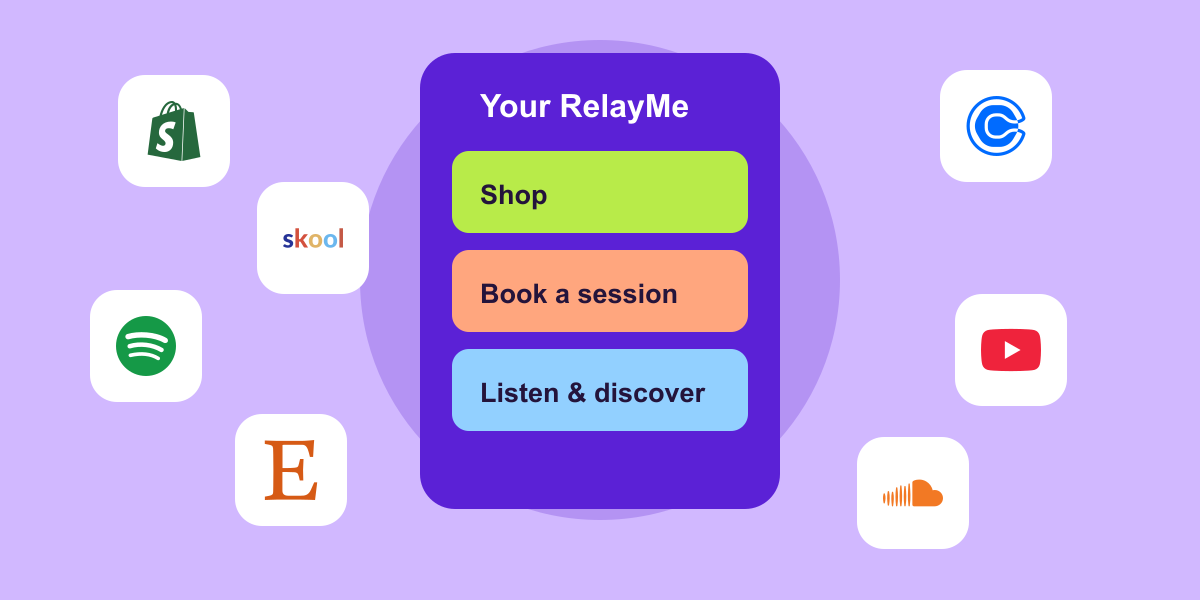
A free RelayMe page can organise your music, video, shop and booking links in one place. Ordinary links remain free; API connectors and other Pro capabilities are a separate choice. A custom FAQ and other Pro features can help answer recurring questions when they suit your page.
A musician might put the featured track first, then a live session and a contact link. A maker might lead with the collection shown in the video. Avoid sending an interested visitor to a page where the relevant work is buried beneath old campaigns.
Check available Link Apps and integrations when building the page. RelayMe helps organise the destination; it does not control social algorithms or guarantee more reach.
When a post takes off, keep the response useful
Test the links again. Check that the offer is still available and the wording matches what the post promised. Answer recurring questions publicly where appropriate, and correct misunderstandings instead of letting a flattering but false claim spread.
If demand exceeds capacity, say so. A waitlist should explain what people are joining and what communication to expect. Do not create false scarcity because the numbers suddenly look exciting.
Then report the outcome accurately. “The post received 20,000 views and the product link was opened 80 times” is different from “the post generated 80 customers”. Use actual figures from your own tools and do not infer purchases from clicks alone.
Your next post does not need to reach everybody. It needs a clear idea, a worthwhile payoff and a next step that makes sense. Prepare that next step before you ask more people to take it.
Research reviewed 14 October 2026. Examples and the two-week plan are original editorial exercises, not reported campaign results or performance guarantees.