Ten customers who want ten different businesses can keep you busy for a year.
That is the awkward part of finding your first customers. You want a yes badly enough to accept almost any request. A custom report here, an extra service there, a promise to build something you had never planned. The revenue is welcome. The business becomes harder to recognise.
The better target is ten people with a similar problem, a reason to solve it now and a realistic way to pay. This guide is for a small service business, creator business or early software product trying to reach that point.

Define the customer by a situation
“Small businesses” is a market description. It does not tell you whom to contact on Tuesday.
Try a situation instead: independent fitness instructors who take bookings through messages and lose track of cancellations. Now you can ask where those instructors work, how they currently organise sessions and what a missed booking costs them.
Your ideal customer profile needs only a few useful details at first: the problem, the existing workaround, the person who can approve spending and the event that makes a change urgent. A beautifully formatted persona is optional.
Salesflare’s customer-acquisition guide distinguishes the company you want to serve from the people involved in buying. For an early business, that distinction can save a wasted demonstration. The person frustrated by a process may not be the person allowed to pay for a fix.
Make a small prospect list you can explain
Begin with 20 names or businesses. Treat that number as a manageable working list, not a conversion formula.
For each one, write a sentence explaining why your offer might be relevant. “They are local” is weak. “They have started running weekly workshops and currently ask people to message for every booking” gives you a reason to investigate.
Look first at professional contacts, introductions and communities where the problem is already being discussed. A partner serving the same buyer can be useful too: a photographer and a web designer, for example, may meet clients at different points in the same launch.
Efficy’s guide covers partnerships, listening and relevant communities. Use those routes to begin a conversation, not to turn every group into a mailing list. Follow the community’s rules and use contact methods that are appropriate for the recipient and your location.
Ask about the last time, not an imaginary future
“Would you use this?” invites politeness. “What happened the last time someone cancelled?” invites a story.
A useful discovery conversation can stay short. Ask how the person handles the task now, what goes wrong, how often it happens and what they have already tried. If they have never tried to solve it, find out why. Perhaps the inconvenience is too small to justify a purchase.
Listen for evidence you can check: time spent, a missed deadline, repeated manual work, an existing subscription. Keep notes without collecting unnecessary personal information. Do not turn a complaint into an invented return-on-investment claim.
Only then show the offer. A sentence is enough: “I help independent instructors turn booking enquiries into a clear self-service booking route.” The buyer should not need your full origin story to understand it.
Use an introduction someone can forward
A warm introduction works better when the intermediary does not have to write your pitch. Here is an original example for a fictional booking-setup service:
Maya helps independent instructors organise their public booking links and session information. She is looking for two instructors who currently handle most enquiries by message and would be willing to discuss the process for 15 minutes. There is no commitment to buy. Would you like an introduction?
Notice what is absent: a claim to transform the industry, a meeting booked without consent and a demand for five referrals.
For a direct message, give a specific reason for contacting that person, explain the relevant problem and ask one small question. If you have made an assumption, label it: “I may have missed your booking page.” Being accurate is more persuasive than pretending you know their business better than they do.
Select early customers as carefully as they select you
Uncork Capital’s first-ten-customers article makes a useful distinction: early design partners should help reveal the market you want to serve, rather than pull the product into unrelated custom work.
Before accepting a pilot, check four things. Does the customer have the problem now? Can you deliver the promised result? Will they give specific feedback? Is their need similar enough to the next customer’s need to teach you something reusable?
One enthusiastic buyer can still be a poor fit if they require a completely different product. You can offer separate paid consulting if that suits your business, but record it separately from evidence that the core offer works.
Turn interest into a clear paid test
A pilot needs a beginning and an end. Write down the scope, price, delivery date, what the customer must provide and how you will judge completion. Make clear what is excluded.
For the fictional instructor service, that might be one public booking page, three session links, a short handover and one revision. It should not quietly become unlimited website support.
After delivery, ask what changed and what still feels difficult. If the customer says it saved time, ask how they assessed that. Seek permission before publishing their name, logo or comments. A real modest result is more useful than an impressive number nobody can substantiate.
Make the route from conversation to action short
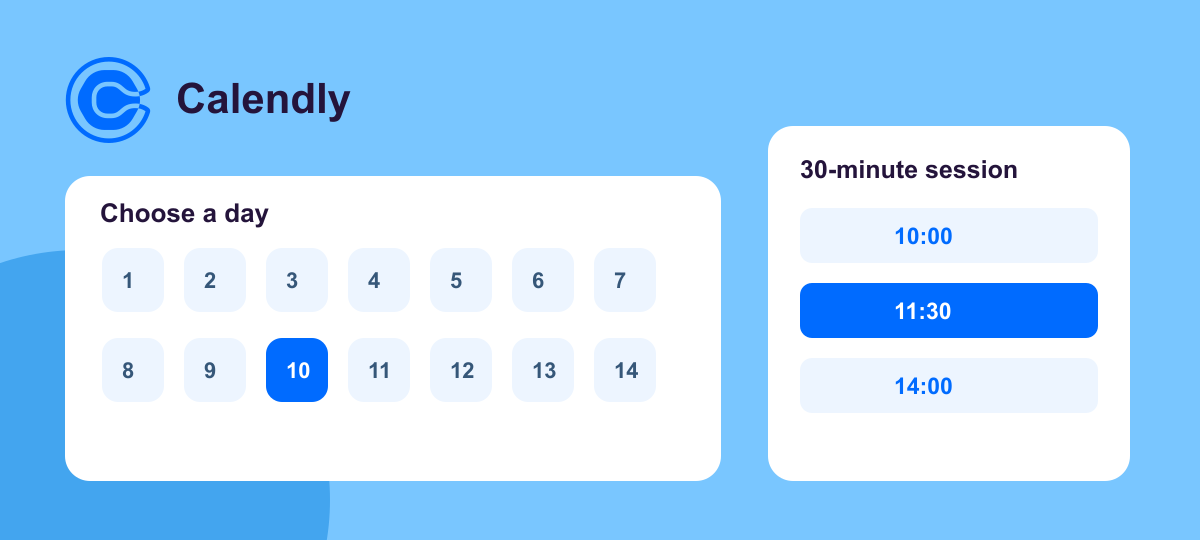
When someone says “send me the details”, send a page that continues the conversation. Put the relevant service first, followed by a sample, a short explanation and the next action.
With RelayMe, you can bring those links together on a free page. A normal Calendly booking link, portfolio link or Shopify product link does not require Pro. Pro adds features such as a custom FAQ and connected Calendly availability when the integration is set up.
The FAQ can answer questions that keep interrupting the same conversation: who the service suits, what is included and what happens after booking. Keep sensitive client material in a private system; a public link page is for information you intend anyone to see.
Track the next decision, not just the contact
A spreadsheet is enough to start. Give each prospect a current stage, the last useful thing you learned and a next action with a date.
“Interested” is not a next action. “Send the two-page scope on Thursday, as requested” is.
When following up, refer to the conversation and add something relevant. If the person declines or asks you to stop, stop. If they are silent, a short, respectful follow-up is different from an endless automated sequence.
Review the list weekly. Many conversations but no paid tests may indicate weak urgency or an unclear offer. Paid tests that require extensive custom work may indicate the wrong buyer group. Successful delivery without repeat demand may mean you have solved an occasional problem and need a business model that accounts for it.
Your next five working days
Use the first day to choose the buyer situation and write the offer. Spend the second building the small prospect list. On the third, ask for a few relevant introductions or join a conversation where your contribution is welcome. Use the fourth for discovery and the fifth to revise the offer from what you heard.
Repeat with evidence. Ten customers is a useful milestone, but the more valuable outcome is knowing why the right person buys.
Put one offer, one sample and one next step on your page. Then send it to someone for whom the problem is real.